Knowledge
Ergonomics and data centre uptime

Pronomic


Why Manual Handling Is a Reliability Issue—Not Just a Safety One
Human factors contribute to 10+ percentage points of data center outages annually. When technicians work under time pressure, without precision tools, they skip steps. They take shortcuts. They create incidents. Learn how ergonomic engineering reduces both absence and downtime.
Data center operators have long treated manual handling as a safety checkbox. Training, PPE, lifting policies—important, but insufficient.
The real story emerges when you overlay this data with uptime analytics.
The Human Factors Pattern
When technicians face awkward, strength-dependent moves, they experience two competing pressures:
-
Time pressure - migration windows are measured in hours
-
Physical strain - an ungainly lift destabilizes judgment and increases error risk
Under that stress, documented procedures become obstacles. Operators find shortcuts. Alignment gets rushed. Connectors don't seat fully until discovered during power-up.
Why Ergonomics Changes Behavior
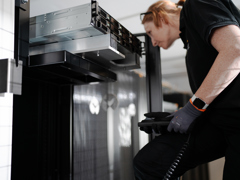
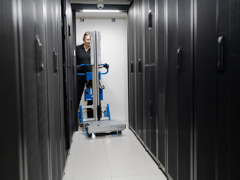
Well-designed lifting equipment eliminates the physical trade-off. When a task is easy, stable, and aligned—operators follow the documented steps. .
This behavioral shift directly reduces:
-
Handling-related damage during installations
-
Near-misses during high-stakes changes
-
Rework and cascading delays
-
The probability that routine maintenance triggers an incident
The Numbers
Removing controllable sources of human error during change windows is therefore a direct material risk reduction.
The implication
Ergonomics isn't preventive health—it's operational resilience.
Explore more relevant topics